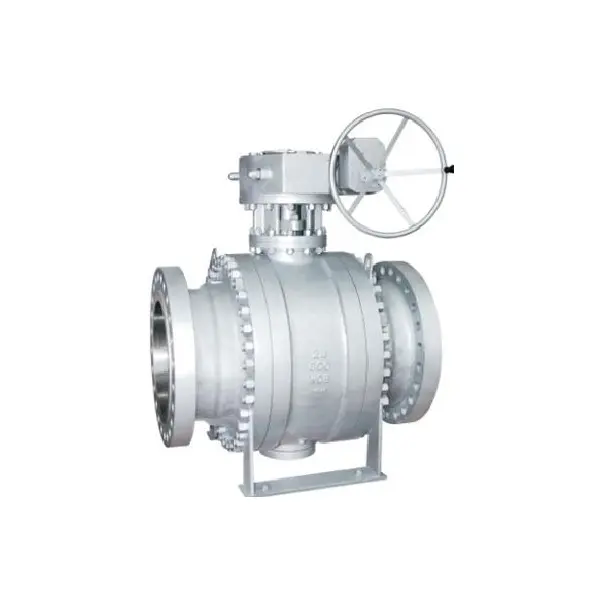
What Makes Globe Valves the Ideal Choice for Industrial Flow Control?
A Globe Valve is a type of valve primarily used for regulating flow in pipelines. Unlike gate or ball valves that provide on/off control, a globe valve allows precise throttling, making it essential in applications where flow rate needs to be adjusted with accuracy. The valve gets its name from its globe-shaped body, which consists of two halves separated by an internal baffle. The flow of the medium (liquid, gas, or steam) changes direction within the valve body, enabling effective control of pressure and flow rate.

In industrial systems — from petrochemical plants to water treatment facilities — maintaining optimal flow control is crucial for efficiency and safety. Globe valves are widely recognized for their high reliability, strong sealing capability, and ease of maintenance. The core advantage lies in their unique design: a movable disk-type element and a stationary ring seat that allows the operator to finely adjust the flow.
What Are the Key Features and Technical Parameters of a Globe Valve?
To evaluate a globe valve, one must consider its design parameters and material properties. The following table outlines the technical specifications typically associated with high-quality industrial-grade globe valves:
| Parameter | Specification Range / Description |
|---|---|
| Valve Type | Globe Valve (Manual, Pneumatic, or Electric Actuated) |
| Body Material | Carbon Steel, Stainless Steel, Cast Iron, Bronze, Alloy Steel |
| Nominal Diameter (DN) | DN15 – DN600 (½ inch to 24 inches) |
| Pressure Rating | PN10 – PN420 / Class 150 – Class 2500 |
| Connection Type | Flanged, Threaded, Butt-Welded, or Socket-Welded |
| Temperature Range | -29°C to +600°C (-20°F to +1110°F) |
| Operation Mode | Handwheel, Gear, Electric Actuator, or Pneumatic Actuator |
| Sealing Type | Metal-to-Metal or Soft Seal (PTFE, Graphite, or Reinforced Materials) |
| Applicable Media | Steam, Oil, Water, Gas, Corrosive Fluids, and High-Temperature Gases |
| Flow Characteristic | Linear or Equal Percentage |
These parameters make the globe valve a versatile and durable choice for various industries. The valve’s ability to regulate flow precisely minimizes energy losses, prevents system overpressure, and optimizes process control.
Why Choose a Globe Valve: Advantages and Applications
The advantages of a globe valve extend beyond its structural simplicity. Its performance characteristics make it ideal for critical applications requiring accurate flow modulation. Below are the main benefits that define its value in industrial operations:
A. Excellent Flow Control Capability
Globe valves allow precise adjustment of flow rate, unlike gate or ball valves that only provide full open or close positions. The disk’s position relative to the seat determines the exact amount of flow, enabling fine-tuned regulation.
B. Strong Sealing Performance
Thanks to its perpendicular seat arrangement, the globe valve achieves a tight seal, reducing leakage and maintaining system pressure. This makes it particularly suitable for high-pressure and high-temperature applications.
C. Robust Design for Longevity
The valve’s design ensures even wear across sealing surfaces, extending operational lifespan and reducing maintenance frequency. Materials like stainless steel and alloy steel enhance corrosion resistance.
D. Ease of Maintenance
Because the seating surfaces are accessible from the valve’s top, maintenance can be performed without removing the valve body from the pipeline — saving downtime and operational costs.
E. Wide Range of Industrial Applications
Globe valves are widely used in:
-
Oil and gas pipelines
-
Chemical processing industries
-
Power generation plants
-
Marine systems
-
Water treatment facilities
-
HVAC systems
Each industry benefits from the valve’s precision, durability, and safety in fluid control.
How Does a Globe Valve Work?
The functionality of a globe valve revolves around its unique internal structure. The valve body contains a movable plug (disc element) and a stationary ring seat inside a generally spherical body. When the handwheel or actuator is operated, it moves the stem, which raises or lowers the plug in relation to the seat.
When the plug is lifted, fluid flows in an S-shaped path, entering through the lower half of the valve and exiting through the upper half. The direction change contributes to pressure drop, but it also allows for exceptional control precision.
Globe valves typically follow one of three designs:
-
Z-Type (Standard Pattern): The most common configuration, featuring high pressure loss but excellent throttling.
-
Y-Type: Designed to reduce flow resistance and pressure drop, ideal for continuous operation.
-
Angle Type: Used where a 90° turn in flow direction is necessary, simplifying piping layout.
Actuation can be manual, pneumatic, or electric, depending on the required control precision and automation level. Pneumatic and electric versions are particularly suited for automated industrial systems requiring remote operation and real-time feedback.
Future Trends: How Globe Valves Are Evolving with Industrial Innovation
With the ongoing evolution of Industry 4.0 and digital manufacturing, the demand for intelligent valve systems is rapidly increasing. Modern globe valves are being integrated with smart actuators and digital sensors that provide real-time data on valve position, pressure, temperature, and flow rate.
Key trends shaping the future of globe valves include:
A. Smart Automation Integration
Next-generation globe valves are compatible with Industrial Internet of Things (IIoT) platforms. These valves feature intelligent actuators capable of remote monitoring, predictive maintenance alerts, and automated calibration.
B. Enhanced Materials and Surface Treatments
To meet the growing demand for performance in extreme conditions, manufacturers are developing corrosion-resistant alloys, ceramic linings, and advanced coatings to extend service life and improve sealing performance.
C. Energy Efficiency Optimization
Reducing energy consumption in flow systems is a top priority. The latest globe valve designs aim to minimize flow resistance while maintaining precise control, contributing to overall system efficiency.
D. Customization and Modular Design
The trend toward flexible manufacturing encourages modular globe valve systems. These allow easier upgrades, faster maintenance, and compatibility across various industrial setups.
The future of globe valves lies in intelligent control, sustainability, and adaptability — essential features for industries pursuing digital transformation.
Frequently Asked Questions (FAQ)
Q1: What is the main difference between a globe valve and a gate valve?
A globe valve is designed for throttling and regulating flow, while a gate valve is meant for fully open or fully closed service. The globe valve’s design allows for more precise control but introduces a higher pressure drop. Gate valves, on the other hand, are more suitable where unrestricted flow is needed and throttling is not required.
Q2: Can a globe valve be installed in any direction?
Globe valves should typically be installed with the flow direction indicated on the body, ensuring that fluid pressure assists in closing the valve. Installing it incorrectly can lead to excessive wear on the seat and stem, potentially shortening the valve’s lifespan and compromising sealing performance.
Why Taian Globe Valves Stand Out and How to Get in Touch
In an industry driven by precision and reliability, Taian has established itself as a trusted manufacturer of high-performance globe valves. Each product undergoes strict quality testing to ensure compliance with international standards like API, DIN, and ASME. Taian’s globe valves are engineered for durability, accurate flow control, and low maintenance requirements, making them ideal for both standard and critical service conditions.
As industries move toward automation and energy efficiency, Taian continues to innovate — integrating smart technologies and sustainable materials into its designs. Whether for petrochemical, power generation, or water management applications, Taian globe valves provide consistent performance and exceptional operational reliability.
For more information, specifications, or technical consultation, contact us today to learn how Taian’s advanced globe valve solutions can enhance your system’s efficiency and reliability.
Related News
- Can standard factory acceptance‑test protocols fully expose long‑term field hazards for trunnion ball‑valve projects?
- What Standardized API Cast Steel Y Strainer Configurations Reduce Plant Pipeline Downtime Losses?
- Why Is the 3 Way Flanged Ball Valve Essential for Modern Industrial Flow Control?
- Why Do Pipe Strainers Matter in Industrial Pipeline Systems?
- Hadian Valve's Ultra-Supercritical Bypass Valves Successfully Pass Assessment
- Huashijie Suzhou Smart Manufacturing Base Launches
Leave me a message