Steam Traps
What Are Steam Traps and Why Are They Essential?
Steam traps are automatic valves that release condensate, air, and other non-condensable gases from a steam system while preventing the escape of live steam. They are critical components in steam systems used across various industries such as power generation, chemical processing, food and beverage, and HVAC. The primary purpose of a steam trap is to maximize the efficiency of heat transfer by ensuring that only dry, saturated steam is present in the system. Without properly functioning steam traps, energy losses, water hammer, and equipment damage can occur, leading to increased operational costs and safety hazards.
There are several types of steam traps, each designed for specific applications and operating principles. The main categories include mechanical traps (like float and thermostatic traps and inverted bucket traps), thermodynamic traps (such as disc traps), and thermostatic traps (including bimetallic and balanced pressure thermostatic traps). The selection of the appropriate steam trap depends on factors like operating pressure, condensate load, and the specific requirements of the application.
Types of Steam Traps
-
Mechanical Steam Traps: These traps operate based on the density difference between steam and condensate. Common types include:
- Float and Thermostatic Traps (F&T)
- Inverted Bucket Traps
- Thermodynamic Steam Traps: These use the dynamic properties of steam and condensate to operate. A popular example is the Disc Trap.
-
Thermostatic Steam Traps: These traps respond to temperature changes. They include:
- Bimetallic Steam Traps
- Balanced Pressure Thermostatic Traps
Key Technical Parameters and Specifications
Understanding the technical parameters of steam traps is crucial for selecting the right model for your application. Below are detailed specifications for various types of steam traps.
Float and Thermostatic (F&T) Steam Traps
| Parameter | Specification |
|---|---|
| Maximum Operating Pressure | Up to 250 psi (17.2 bar) |
| Maximum Temperature | 450°F (232°C) |
| Body Material | Cast Iron, Cast Steel, Stainless Steel |
| Connection Sizes | 1/2" to 2" NPT |
| Capacity | Up to 20,000 lbs/hr (9,072 kg/hr) |
Inverted Bucket Steam Traps
| Parameter | Specification |
|---|---|
| Maximum Operating Pressure | Up to 600 psi (41.4 bar) |
| Maximum Temperature | 750°F (399°C) |
| Body Material | Forged Steel, Stainless Steel |
| Connection Sizes | 1/2" to 1-1/2" NPT |
| Capacity | Up to 4,500 lbs/hr (2,041 kg/hr) |
Thermodynamic Disc Steam Traps
| Parameter | Specification |
|---|---|
| Maximum Operating Pressure | Up to 600 psi (41.4 bar) |
| Maximum Temperature | 800°F (427°C) |
| Body Material | Stainless Steel, Carbon Steel |
| Connection Sizes | 1/2" to 1" NPT |
| Capacity | Up to 1,100 lbs/hr (499 kg/hr) |
Bimetallic Steam Traps
| Parameter | Specification |
|---|---|
| Maximum Operating Pressure | Up to 600 psi (41.4 bar) |
| Maximum Temperature | 800°F (427°C) |
| Body Material | Stainless Steel, Carbon Steel |
| Connection Sizes | 1/2" to 1" NPT |
| Capacity | Up to 4,000 lbs/hr (1,814 kg/hr) |
Steam Traps FAQ
What is the primary function of a steam trap?
The primary function of a steam trap is to automatically drain condensate, air, and other non-condensable gases from a steam system while preventing the loss of live steam. This ensures efficient heat transfer, protects equipment from damage caused by water hammer and corrosion, and reduces energy consumption.
How often should steam traps be inspected and maintained?
Steam traps should be inspected regularly, with the frequency depending on the type of trap, operating conditions, and criticality of the application. As a general guideline, mechanical traps like F&T and inverted bucket traps should be checked every 3 to 6 months, while thermodynamic and thermostatic traps may require inspection every 6 to 12 months. Regular maintenance is essential to prevent failures, detect leaks, and ensure optimal performance.
What are the common failure modes of steam traps?
Common failure modes include blowing live steam (which wastes energy), becoming blocked or clogged with dirt (preventing condensate discharge), and failing open or closed. Failures can result from wear and tear, improper sizing, dirt ingress, corrosion, or incorrect installation. Regular testing and maintenance help identify and rectify these issues promptly.
How do I select the right steam trap for my application?
Selecting the right steam trap involves considering several factors: the operating pressure and temperature, condensate load, the need for air venting, resistance to freezing and water hammer, and the specific application (e.g., tracing, process equipment, or heating). Consulting manufacturer specifications, industry standards, and possibly an engineer is recommended to ensure the trap meets the system requirements efficiently.
What is the difference between a mechanical steam trap and a thermodynamic steam trap?
Mechanical steam traps, such as float and inverted bucket types, operate based on the density difference between steam and condensate. They are generally more efficient at handling large and varying condensate loads. Thermodynamic steam traps, like disc traps, use the kinetic energy and pressure differences of steam and condensate to open and close. They are compact, robust, and suitable for high-pressure applications but may be less efficient at low pressures or with light loads.
Can a steam trap handle both condensate and air?
Yes, many steam traps are designed to vent air and non-condensable gases in addition to draining condensate. For example, Float and Thermostatic (F&T) traps have a thermostatic air vent that opens at lower temperatures to release air. Inverted bucket traps can also vent air, though less efficiently. Proper air removal is crucial for system efficiency and preventing corrosion.
What are the energy savings associated with proper steam trap maintenance?
Properly maintained steam traps can lead to significant energy savings. A single failed steam trap blowing live steam can waste hundreds to thousands of dollars annually in fuel costs, depending on the size and pressure. A well-maintained steam trap system ensures that only condensate is removed, minimizing steam loss, improving heat transfer efficiency, and reducing overall energy consumption, which can result in substantial cost savings and a lower carbon footprint.
Are there any industry standards for steam traps?
Yes, there are several industry standards that govern the design, testing, and performance of steam traps. Key standards include ASME Performance Test Code PTC 39, which outlines methods for testing steam traps, and ISO 7841 and ISO 7842 for automatic steam traps. These standards help ensure reliability, safety, and efficiency across different applications and manufacturers.

- View as
881-885 Screw-end Bucket Steam Trap
Taian provides high quality 881-885 Screw-end Inverted Bucket Steam Trap,You can rest assured to buy it from our factory.The product is a mechanical type of steam trap, and its working principle is based on the density difference between steam and condensate. There is an inverted bucket inside it, and the opening and closing of the valve are controlled by a lever system.
681F-996F Flanged Inverted Bucket Steam Trap
Taian provides high quality 681-996 Flanged Inverted Bucket Steam Trap,You can rest assured to buy it from our factory.The product is a mechanical type of steam trap, and its working principle is based on the density difference between steam and condensate. There is an inverted bucket inside it, and the opening and closing of the valve are controlled by a lever system.

FT14HC-III Screw End Flanged Steam Trap
This steam trap features an advanced structure and outstanding performance. It can quickly and continuously discharge saturated condensate, eliminate water accumulation in heating equipment, and maximize heat exchange efficiency. The valve core and seat are made of cobalt-chromium-tungsten alloy, paired with a hemispherical sealing structure, ensuring wear resistance, corrosion resistance, tight sealing and long service life. The float-lever design is immune to steam pressure fluctuations for stable operation. It can automatically discharge non-condensable gases to eliminate gas locks, with a water seal structure preventing steam leakage. Its continuous and stable drainage delivers exceptional performance in condensate recovery systems, making it an ideal choice for efficient steam system operation.
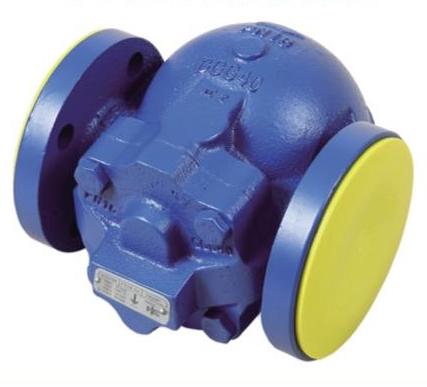
FT14 Flanged Steam Trap
This high-performance steam trap quickly and continuously discharges saturated condensate, preventing water accumulation in heating equipment to maximize heating efficiency. Its valve core and seat, crafted from wear-resistant, corrosion-resistant cobalt-chromium-tungsten alloy, feature a precision-engineered semi-spherical seal for tightness and long service life. The float-lever design ensures stable, continuous operation unaffected by steam pressure changes, while X-series components eliminate gas locks by discharging non-condensable gases. A reliable water seal prevents steam leakage, and steady condensate flow makes it ideal for condensate recovery systems.


TD Thermodynamic Steam Trap
Taian, as a professional R&D and manufacturing factory of TD Thermodynamic Steam Trap in China, specializes in mass production, strict ISO quality control and OEM/ODM service.The TD series high-pressure inverted bucket steam trap is a mechanical type of steam trap. It utilizes the density difference between steam and condensate water and controls the opening and closing of the valve through the buoyancy of the inverted bucket. This type of steam trap is suitable for high-pressure steam systems and can efficiently discharge condensate water and prevent steam leakage
As a reliable Steam Traps manufacturer and supplier in China, we have custom options and volume discount pricing. Please just send us a quotation!