Why Is the 3 Way Flanged Ball Valve Essential for Modern Industrial Flow Control?
Industrial systems demand precision, durability, and efficient fluid routing. A 3 Way Flanged Ball Valve has become a critical component in pipelines requiring reliable directional control, leak prevention, and long-term operational stability. This comprehensive guide explains how these valves work, their applications, advantages, material choices, installation practices, maintenance methods, and how to select the right solution for your industry.

Table of Contents
- 1. What Is a 3 Way Flanged Ball Valve?
- 2. How Does It Work?
- 3. Main Types of 3 Way Ball Valves
- 4. Key Benefits
- 5. Industrial Applications
- 6. Material Selection Guide
- 7. Pressure and Temperature Considerations
- 8. Installation Best Practices
- 9. Maintenance Tips
- 10. 3 Way vs 2 Way Ball Valves
- 11. How to Choose the Right Valve
- 12. Common Buying Mistakes
- 13. Future Trends in Valve Technology
- 14. Frequently Asked Questions
- 15. Conclusion
1. What Is a 3 Way Flanged Ball Valve?
A 3 Way Flanged Ball Valve is a multi-port flow control valve designed to direct, mix, or divert media within industrial piping systems. Unlike traditional two-way valves that simply open or close flow, a three-way valve allows operators to control multiple flow paths using a single valve body.
The valve uses a rotating ball with specially designed internal ports. When the handle or actuator rotates the ball, the fluid direction changes accordingly. Flanged connections provide secure sealing and easy integration into high-pressure pipeline systems.
Key Function: A 3 Way Flanged Ball Valve can combine two inlet streams into one outlet or divert one inlet flow into two different outlets.
| Feature | Description |
|---|---|
| Connection Type | Flanged Ends |
| Flow Ports | Three |
| Operation | Manual, Pneumatic, Electric |
| Media | Liquids, Gases, Steam, Chemicals |
2. How Does a 3 Way Flanged Ball Valve Work?
The operation principle is based on a hollow rotating ball inside the valve body. The ball contains internal pathways that align with the valve ports during rotation.
Depending on the ball design and rotation angle, the valve can:
- Redirect fluid flow
- Mix multiple streams
- Shut off one side while opening another
- Control alternating flow directions
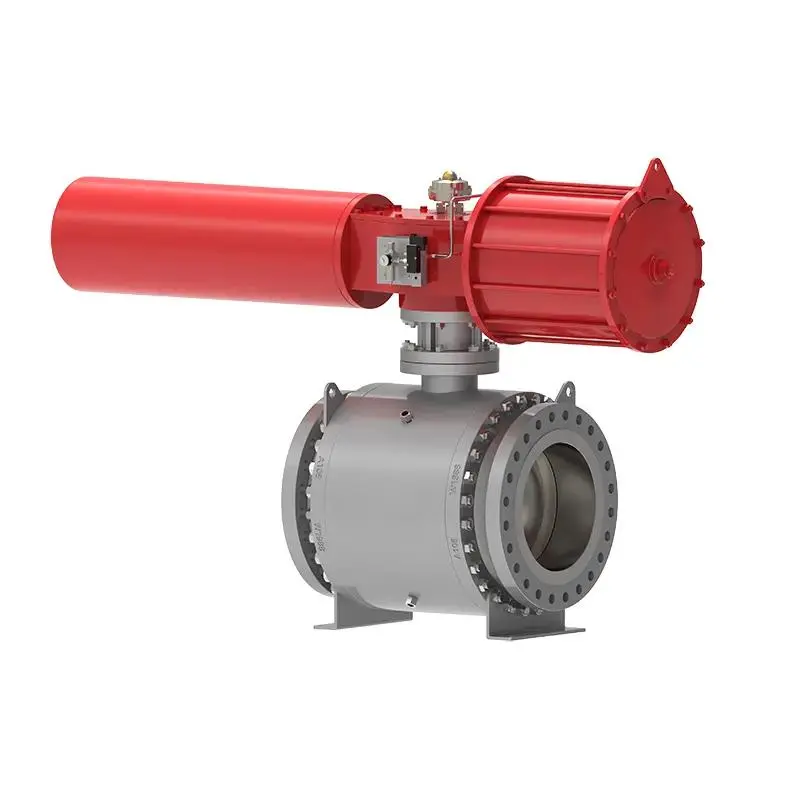
The valve may operate manually with a lever or automatically using pneumatic or electric actuators.
Important: Correct valve orientation during installation is essential because incorrect port alignment can disrupt system performance and cause pressure imbalance.
3. Main Types of 3 Way Ball Valves
There are two primary configurations commonly used in industrial systems:
L-Port Valve
The L-port valve directs flow between two different pathways. It is ideal for switching applications where flow alternates between outlets.
T-Port Valve
The T-port design enables mixing or splitting of flow among three ports simultaneously. This configuration is frequently used in chemical processing and HVAC systems.
| Valve Type | Function | Best Application |
|---|---|---|
| L-Port | Flow diversion | Switching systems |
| T-Port | Mixing/dividing | Complex flow management |
4. Key Benefits of Using a 3 Way Flanged Ball Valve
Industries prefer these valves because they reduce system complexity while improving operational efficiency.
- Reduced Piping: One valve can replace multiple conventional valves.
- Lower Maintenance Costs: Fewer components mean reduced maintenance.
- Excellent Sealing: Ball valves provide tight shutoff performance.
- Fast Operation: Quarter-turn action ensures quick response.
- High Durability: Suitable for harsh industrial environments.
- Automation Compatibility: Easily integrated with actuators.
- Compact Design: Saves valuable installation space.
For industries dealing with corrosive fluids, high pressure, or frequent switching operations, these benefits directly improve production reliability and reduce downtime.
5. Industrial Applications
A 3 Way Flanged Ball Valve is widely used across various sectors due to its flexible flow control capabilities.
| Industry | Application |
|---|---|
| Oil & Gas | Flow diversion and process control |
| Chemical Processing | Mixing corrosive chemicals |
| HVAC | Temperature regulation systems |
| Water Treatment | Fluid distribution systems |
| Food & Beverage | Sanitary fluid management |
| Pharmaceutical | Sterile process control |
In automated production facilities, these valves play a vital role in maintaining consistent operational performance and minimizing manual intervention.
6. Material Selection Guide
Selecting the proper valve material significantly affects longevity and system safety.
Stainless Steel
Offers superior corrosion resistance and is widely used in chemical, food, and pharmaceutical industries.
Carbon Steel
Provides excellent strength for high-pressure industrial applications.
Brass
Suitable for low-pressure water and HVAC applications.
| Material | Advantages | Recommended Use |
|---|---|---|
| Stainless Steel | Corrosion resistant | Chemical industries |
| Carbon Steel | High strength | Oil & gas |
| Brass | Cost effective | Water systems |
7. Pressure and Temperature Considerations
Industrial environments often expose valves to extreme conditions. Selecting a valve without proper pressure and temperature ratings can lead to leakage or catastrophic failure.
- Verify ANSI or DIN flange standards
- Check maximum operating pressure
- Review temperature compatibility with seals
- Consider thermal expansion effects
- Ensure media compatibility
PTFE seats are commonly used for chemical resistance, while metal-seated valves are preferred for high-temperature applications.
8. Installation Best Practices
Proper installation extends valve service life and improves operational safety.
- Inspect valve interiors before installation
- Confirm flange alignment
- Use correct gasket materials
- Tighten bolts evenly
- Avoid pipeline stress on valve body
- Test operation before system startup
Incorrect installation remains one of the leading causes of premature valve failure in industrial systems.
9. Maintenance Tips
Routine maintenance helps prevent unexpected shutdowns and extends equipment lifespan.
| Maintenance Task | Recommended Frequency |
|---|---|
| Leak inspection | Monthly |
| Seal inspection | Quarterly |
| Operational testing | Every 6 months |
| Internal cleaning | Annually |
Preventive maintenance minimizes operational interruptions and improves long-term efficiency.
10. 3 Way vs 2 Way Ball Valves
| Feature | 3 Way Valve | 2 Way Valve |
|---|---|---|
| Flow Paths | Three | Two |
| Flow Diversion | Yes | Limited |
| Mixing Capability | Yes | No |
| System Complexity | Reduced | Higher |
11. How to Choose the Right 3 Way Flanged Ball Valve
Choosing the correct valve requires evaluating several critical factors:
- Flow direction requirements
- Operating pressure
- Temperature range
- Media compatibility
- Connection standards
- Automation requirements
- Maintenance accessibility
Partnering with an experienced manufacturer helps ensure the valve matches operational demands and regulatory requirements.
Zhejiang Taian Valve Co., Ltd. provides industrial valve solutions engineered for reliability, durability, and performance across multiple industries worldwide.
12. Common Buying Mistakes
Many buyers focus solely on price while overlooking long-term performance requirements.
- Choosing incorrect materials
- Ignoring pressure ratings
- Selecting improper port configuration
- Overlooking actuator compatibility
- Neglecting maintenance accessibility
- Using non-standard flange dimensions
These mistakes can result in system inefficiencies, frequent failures, and expensive downtime.
13. Future Trends in Valve Technology
Modern industrial automation continues driving innovation in valve manufacturing.
- Smart valve monitoring systems
- IoT-enabled predictive maintenance
- Improved corrosion-resistant coatings
- Advanced sealing technologies
- Energy-efficient actuator integration
As industries pursue higher efficiency and sustainability, advanced 3 Way Flanged Ball Valve solutions will become increasingly important.
14. Frequently Asked Questions
Q1: What is the difference between an L-port and T-port valve?
An L-port valve mainly diverts flow between two paths, while a T-port valve can mix or split flow among three ports simultaneously.
Q2: Can a 3 Way Flanged Ball Valve handle high pressure?
Yes. Industrial-grade valves are specifically designed for high-pressure systems depending on their material and pressure class ratings.
Q3: Which industries use these valves most frequently?
Oil & gas, chemical processing, HVAC, water treatment, pharmaceutical, and food industries commonly use these valves.
Q4: How long does a flanged ball valve typically last?
With proper maintenance and suitable operating conditions, industrial ball valves can operate reliably for many years.
Q5: Are automated actuators available?
Yes. Pneumatic and electric actuators are widely available for automated flow control systems.
15. Conclusion
A 3 Way Flanged Ball Valve is an essential component for industries requiring efficient, flexible, and reliable flow management. Its ability to divert, mix, and control multiple fluid pathways with minimal system complexity makes it a preferred solution in modern industrial operations.
From chemical plants and HVAC systems to oil pipelines and water treatment facilities, these valves improve efficiency, reduce maintenance costs, and enhance operational safety.
Zhejiang Taian Valve Co., Ltd. specializes in high-performance industrial valves designed for demanding applications worldwide.
Contact us today to discover customized valve solutions for your projects and improve your industrial flow control efficiency.
Related News
- Can standard factory acceptance‑test protocols fully expose long‑term field hazards for trunnion ball‑valve projects?
- What Standardized API Cast Steel Y Strainer Configurations Reduce Plant Pipeline Downtime Losses?
- Why Do Pipe Strainers Matter in Industrial Pipeline Systems?
- Hadian Valve's Ultra-Supercritical Bypass Valves Successfully Pass Assessment
- Huashijie Suzhou Smart Manufacturing Base Launches
- How Do Smart Steam Traps Transform Industrial Energy Efficiency?
Leave me a message