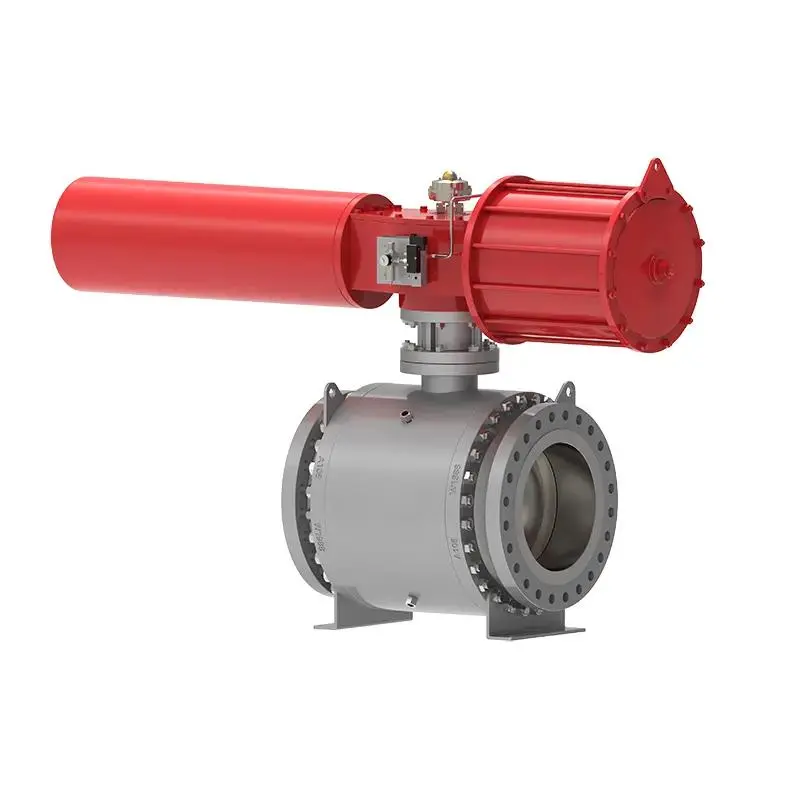
Gate Valve
What is a Gate Valve?
A Gate Valve is a type of valve used primarily for isolating or blocking flow in a pipeline. It operates by lifting a gate or wedge out of the path of the fluid. Known for their tight sealing and minimal pressure drop when fully open, gate valves are essential in various industries such as oil and gas, water treatment, and chemical processing. Their design allows for a straight-through flow, which reduces turbulence and energy loss, making them highly efficient for on/off applications rather than flow regulation.
Key Features of Our Gate Valves
Our gate valves are engineered with precision to ensure reliability, durability, and optimal performance in demanding environments. Below are the standout features that set our products apart:
- Robust Construction: Manufactured from high-grade materials such as stainless steel, cast iron, or bronze, providing excellent resistance to corrosion, high pressure, and extreme temperatures.
- Tight Sealing: Utilizes advanced sealing mechanisms, including soft seats or metal-to-metal seals, to prevent leaks and ensure zero fluid bypass.
- Easy Operation: Designed with ergonomic handwheels, gear operators, or actuators for smooth and effortless opening and closing, even in high-pressure systems.
- Low Maintenance: Minimal moving parts and self-lubricating components reduce the need for frequent servicing, lowering long-term operational costs.
- Versatility: Suitable for a wide range of media including water, oil, gas, steam, and corrosive chemicals, with customizable options for specific applications.
- Bi-Directional Flow: Capable of handling flow in both directions, offering flexibility in pipeline design and installation.
Detailed Product Parameters
To assist in selecting the right gate valve for your needs, we have compiled detailed specifications in the table below. These parameters are critical for ensuring compatibility with your system requirements.
| Parameter | Description | Available Options |
|---|---|---|
| Size Range | Nominal diameter of the valve, determining flow capacity. | 1/2 inch to 48 inches |
| Pressure Rating | Maximum pressure the valve can withstand without failure. | Class 150 to Class 2500 (ANSI), PN10 to PN420 |
| Temperature Range | Operating temperature limits for safe performance. | -20°F to 1000°F (-29°C to 538°C) |
| Body Material | Primary material used for valve construction. | Stainless Steel, Cast Iron, Bronze, Ductile Iron, Carbon Steel, Alloy 20 |
| Trim Material | Materials for internal components like gate and seat. | Stainless Steel, Bronze, Monel, Hastelloy, PTFE |
| End Connection Type | Method of connecting the valve to pipelines. | Flanged, Threaded, Socket Weld, Butt Weld, Wafer |
| Actuation Type | Mechanism used to operate the valve. | Manual (Handwheel, Lever), Pneumatic, Electric, Hydraulic |
| Seat Type | Design of the sealing surface for leak-proof closure. | Soft Seat (Elastomeric), Metal Seat, Flexible Wedge, Solid Wedge |
| Standards Compliance | Industry standards the valve meets for quality and safety. | API 600, API 602, ASME B16.34, BS 5352, ISO 10434 |
Gate Valve FAQs
Here are some frequently asked questions about gate valves, providing clear and detailed answers to help you make informed decisions.
What is the primary function of a gate valve?
The primary function of a gate valve is to fully open or completely shut off the flow in a pipeline. It is not designed for throttling or regulating flow, as partial opening can cause vibration, erosion, and damage to the valve components.
How does a gate valve work?
A gate valve operates by rotating a handwheel or actuator, which moves a stem connected to a gate or wedge. When the valve is opened, the gate is lifted vertically out of the flow path, allowing unobstructed passage. When closed, the gate descends to create a tight seal against the seats, blocking the flow entirely.
What are the advantages of using a gate valve?
Gate valves offer several advantages, including low fluid resistance and minimal pressure drop when fully open, bi-directional flow capability, tight sealing with zero leakage, and durability in high-pressure and high-temperature applications. They are also relatively simple in design, making them easy to maintain.
What materials are commonly used for gate valve construction?
Common materials include stainless steel for corrosion resistance, cast iron for general service, bronze for seawater applications, and carbon steel for high-temperature environments. Trim materials like PTFE or Monel are used for enhanced sealing and chemical resistance.
Can gate valves be used for throttling flow?
No, gate valves are not recommended for throttling. Throttling can cause cavitation, vibration, and premature wear on the gate and seats, leading to failure. For flow control, globe valves or ball valves are more suitable.
How do I select the right gate valve for my application?
Consider factors such as the type of fluid (e.g., water, oil, corrosive chemicals), pressure and temperature requirements, pipe size, end connections, and material compatibility. Consulting with an engineer or referring to industry standards like ANSI or API can help ensure the correct selection.
What maintenance is required for gate valves?
Regular maintenance includes inspecting for leaks, lubricating the stem and moving parts, checking seal integrity, and cleaning internal components. In high-cycle applications, more frequent inspections may be necessary to prevent seizing or wear.
What is the difference between a rising stem and non-rising stem gate valve?
In a rising stem design, the stem moves up and down with the gate, providing a visual indicator of valve position. In a non-rising stem design, the stem rotates without vertical movement, making it suitable for spaces with limited vertical clearance.
Are gate valves suitable for abrasive fluids?
Gate valves are generally not ideal for abrasive fluids, as particles can erode the sealing surfaces and cause leakage. For such applications, valves with hardened trim or alternative designs like knife gate valves are preferred.
What industry standards apply to gate valves?
Key standards include API 600 for steel gate valves, API 602 for compact steel gate valves, ASME B16.34 for valve pressure-temperature ratings, and ISO 10434 for petroleum and natural gas industries. Compliance ensures safety, reliability, and interoperability.

- View as

AP Pressure Seal Bonnet Gate Valve
As the professional manufacturer, we would like to provide you Taian AP Pressure Seal Bonnet Gate Valve. And we will offer you the best after-sale service and timely delivery.
The API Pressure Seal Bonnet Gate Valve is a high-performance gate valve specially designed for high-pressure and high-temperature working conditions, and is widely used in industries such as power, petrochemical, oil refining, natural gas, and nuclear energy. Its core feature is the adoption of a pressure-sealed valve cover structure, which replaces the traditional bolted valve cover and achieves self-sealing under high pressure, thus avoiding the risk of leakage.

APl Cast Steel Slab Gate Valve
Taian, as a professional R&D and manufacturing factory of APl Cast Steel Slab Gate Valve in China, specializes in mass production, strict ISO quality control and OEM/ODM service.The Slab Gate Valve is a high-performance valve that complies with API 6D (pipeline valve) or API 600 (general gate valve) standards, specially designed for high-pressure and large-diameter applications such as long-distance oil and gas pipelines, storage and transportation systems, LNG, and refining and chemical plants. Its core feature is the integrated Slab Gate, which can achieve bidirectional sealing, no residual cavity, full bore, and Piggable.

APl Stainless Steel Gate Valve
Taian provides high quality APl Stainless Steel Gate Valve,You can rest assured to buy it from our factory.

APl Cast Steel Gate Valve
The pressure ratings of APl Cast Steel Gate Valve range from CLASS 150 to Class 2500(PN10 to PN420).
Nominal diameter 1/2 "to 4" (DN50-DN1200)
Temperature range: -196℃ to 425℃
Nominal diameter 1/2 "to 4" (DN50-DN1200)
Temperature range: -196℃ to 425℃

DIN Cast Steel Gate Valve
As a professional high quality Taian DIN Cast Steel Gate valve manufacturer,we will offer you the best after-sale service.The valve body is made of ductile Cast Steel, which has good strength and corrosion resistance. The non-ascending valve stem design makes operation convenient. DIN Cast Steel Gate valve is applicable to various media, including water, oil and steam. The design and manufacture of this valve follow the German DIN standard, ensuring its reliability and durability in various industrial applications.
As a reliable Gate Valve manufacturer and supplier in China, we have custom options and volume discount pricing. Please just send us a quotation!